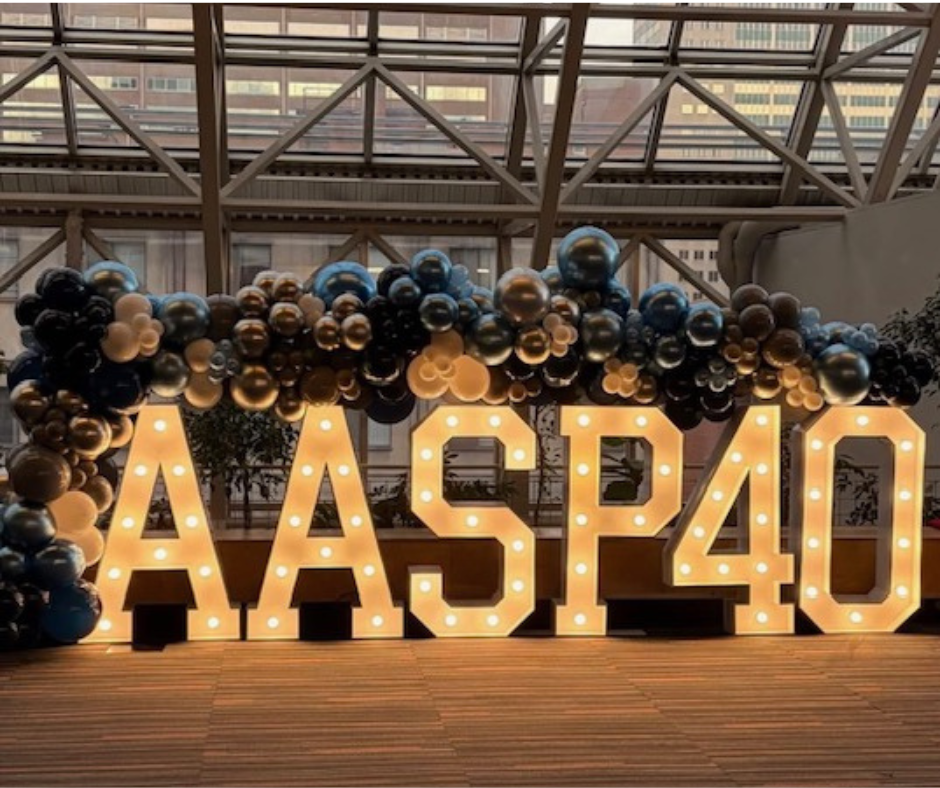
Poster Presentation for the 2025 Performing Arts Medicine Association's International Symposium in Washington, D.C.

Why is it important to prepare mentally for performances, and why should performing artists have a pre-performance routine that includes mental skills?
A pre-performance routine is typically a set of cognitive and behavioral elements a performer systematically engages in before each performance (Lubert et al., 2023). It enhances concentration by directing attention to task-specific cues and minimizes internal and external distractions (Lubert et al., 2023). Performance preparation that includes mental training has been shown to help manage performance anxiety and support optimal performance. The use of mental skills such as visualization, imagery, breathwork, and cognitive self-talk can help performers focus their energy, calm anxiety, cope with the stressors and demands of performance, and increase confidence, thereby improving their overall performance. It is important to remember that a pre-performance routine should be individualized for each performing artist based on their performance needs and their comfort level with and overall understanding of the skills.
According to a 2023 study by Gómez-López and Sánchez-Cabrero, 95% of performers have experienced some form of stage anxiety over the course of their career (shown in the chart below). Research supports the belief that this percentage can decrease if performing artists are given the knowledge and tools to create a pre-performance routine using mental skills that work best for them and their type of performance. Thus, not only enhancing their future performances, but also improving their overall psychological, emotional, mental, and physical well-being.


How can I incorporate mental skills into my daily routine?
This is an exercise to help the performer practice adding mental skills into their daily routines. For a dancer, this may look like the following:
When at the studio, the dancer can mentally prepare for their class or rehearsal by using positive self-talk to encourage and boost their confidence. They can also practice a breathing sequence, such as inhaling and exhaling with a three, four, or five count cadence for six rounds.
During class, the dancer can reinforce information or corrections from their instructor by mentally rehearsing the skill or sequence. If they notice unproductive thoughts coming up, they can try to reframe and refocus those statements into productive ones. Additionally, taking a few deep breaths can help if the dancer notices their stress or anxiety spiking.
After class, the dancer can mentally review their class or rehearsal and practice any skills, sequences, or full routines as they ride home, shower, or get ready for bed. They can also practice diaphragmatic breathing to help them relax and decompress from rehearsal and their day.
Diaphragmatic breathing is a form of deep breathing that can reduce one’s heart rate and stress by stimulating the vagus nerve and increasing venous blood flow towards the heart (Strycharczyk et al., 2021). When first learning the technique, it is recommended to practice lying down (Strycharczyk et al., 2021) and in a non-stressful environment. Once a performer is more comfortable with the practice, they can incorporate it while in other positions, such as sitting in their dressing room before a performance, standing in the wings waiting to go on stage, or other times when they are feeling stressed or anxious. Dancers often take shallow breaths, getting air only into their upper ribcage, rather than deep breaths, because they are mindful of how breathing can change the shape of their bodies. Nevertheless, in not taking deep breaths, which could be noticed on stage, the amount of oxygen that gets into their blood to nourish and support their working muscles is reduced (Thompson, 2020). However, when taught and used correctly, diaphragmatic breathing can help stabilize the lumbar spine and distribute the forces of gravity more equally (Thompson, 2020).


Anchor Breath Exercise
Take a deep breath in through the nose and out through the mouth when walking into the audition, competition, rehearsal, or performance space to “anchor you” in the space, the moment, and your character.
Deep Breathing and Imagery Exercise
This exercise is simple enough to get in and out of it easily no matter where you are. Start by closing your eyes. While taking deep breaths, imagine a place that brings you peace, calm, and joy. Engage as many of your senses as you can to experience this place as fully as possible. Once you’re mentally in this calming place, start breathing with a cadence. Each breath in and out will be done on three counts. Three counts to inhale and three counts to exhale. Inhale through your nose and exhale through your mouth. Practice the exercise for a few minutes, or longer if you desire.
Research has found that meditation training can alter, for the better, the white matter that connects the anterior cingulate cortex (ACC) to other structures of the brain. After meditating, the ACC can “regulate your thoughts, behaviors, and emotions” (Weisinger & Pawliw-Fry, 2015, p.143), which can help a performer respond more effectively in high-pressure situations. Weisinger and Pawliw-Fry (2015) recommend using a meditation practice that includes relaxation, mental imagery, and mindfulness as the combination helps the brain depressurize when practiced for thirty minutes a day. Counting is one way to actively meditate because it keeps your mind engaged on one task while slowing your breathing.
Black Curtain Count Down Meditation Exercise
Start this exercise by closing your eyes and picturing a black curtain where the numbers will appear and disappear as you count down. Start with one hundred, and slowly, with each inhale and exhale through your nose, count backwards in your head until you reach one. Example: 100 (inhale), 99 (exhale), 98 (inhale), 97 (exhale), etc.
Like diaphragmatic breathing, the Alexander technique can be practiced by lying down with one’s feet planted on the floor, knees facing the ceiling, and creating spinal alignment by placing books or a yoga block under the head. It can be integrated into the pre-performance routine to prevent injury, improve technique, and lessen performance anxiety. One of the principles Alexander focused on was that of “psychophysical unity, a concept proposing that how one thinks about an activity affects how one does it and that every action in one part of the body is supported or interfered with by the rest of the body” (Ashe, 2020, p.27). Studies of musicians who have practiced the Alexander technique as part of their performance preparation have shown that performance anxiety has been reduced and performance quality increased (Lawrence, 2015).

Self-talk can be used to focus attention and energy and is a widely endorsed and researched performance enhancement tool in sport and performance psychology literature (Van Raalte et al., 2016). It’s important to remember that self-talk is individualistic and needs to “feel right” for the performer. If it’s forced or feels awkward, it can deplete cognitive resources, whereas when it feels right, it uses less cognitive energy and is more likely to support optimal performance (Van Raalte et al., 2016).


Pratt (2020) suggests one exercise for incorporating self-talk into a routine is to write down positive and encouraging statements and place them where they’ll be visible when you need to be reminded most, such as a dressing room mirror.
Examples of Positive & Productive Self-Talk
I am capable, I can do this!
You’ve got this!
I will give my all during this performance.
You’re doing great!
Turn just like you did in rehearsal.
That sequence was beautiful!
I have been preparing for this competition and I am ready to perform.
I am proud of myself for the progress I have made this season.
Whatever the outcome of this performance, I will learn and grow from this experience.
Conclusion:
As psychological research continues to expand within the performing arts world, psychological skills training and its benefits are being praised by performing artists who swear by them. They’re not only sharing the positive impact the techniques have had on their careers but also encouraging their use within the performing arts community and the broader human collective. One of these performers is New York City Ballet Principal Megan Fairchild, who uses imagery and breathing techniques to calm her “overly active anxiety” (Fairchild, 2021, p. 19) before big performances in addition to using meditation techniques to decrease stress (Fairchild, 2021). Another is Lin-Manuel Miranda (composer, lyricist, and writer of hit Broadway musicals In the Heights and Hamilton), who, in his 2018 book, shared many of the upbeat, positive messages he would tweet first thing in the morning and then again at night. Suzuki (2021) believes that his positive, optimistic, and incredibly creative mindset is due, in part, to these daily positive self-tweets. By publicly sharing how they have used mental skills to enhance and support their performance and careers, artists like Fairchild and Miranda are normalizing the use of mental skills not only for other performing artists but for younger generations of performers in the making.
References:
Ashe, C. H. (2020). Applying the Alexander technique to modern pedal harp performance and pedagogy: A discussion with Imogen Barford and Marie Leenhardt. The American Harp Journal, Winter 2020, 26–33.
Braden, A. M., Osborne, M. S., & Wilson, S. J. (2015). Psychological intervention reduces self-reported performance anxiety in high school music students. Frontiers in Psychology, 6, 122872. https://doi.org/10.3389/fpsyg.2015.00195
Clark, T., & Williamon, A. (2011). Evaluation of a mental skills training program for musicians. Journal of Applied Sport Psychology, 23(3), 342–359. https://doi.org/10.1080/10413200.2011.574676
Fairchild, M. (2021). The ballerina mindset: How to protect your mental health while striving for excellence. Penguin Books.
Gómez-López, B., & Sánchez-Cabrero, R. (2023). Current trends in music performance anxiety intervention. Behavioral Sciences, 13(9). https://doi.org/10.3390/bs13090720
Henshaw, A., & Collyer, S. (2022). Under pressure: Reports of performance anxiety across multiple singing genres. Journal of Singing, 78(5), 583-590. https://doi.org/10.53830/JETA7812
Lawrence, D. (2015). Alexander technique may help reduce performance anxiety in musicians. Focus on Alternative and Complementary Therapies, 20(1), 50–51. https://doi.org/10.1111/fct.12163
Lubert, V. J., Nordin-Bates, S. M., & Gröpel, P. (2023). Effects of tailored interventions for anxiety management in choking-susceptible performing artists: a mixed-methods collective case study. Frontiers in Psychology, 14, 1164273–1164273. https://doi.org/10.3389/fpsyg.2023.1164273
Niering, M., Monsberger, T., Seifert, J., & Muehlbauer, T. (2023). Effects of psychological interventions on performance anxiety in performing artists and athletes: A systematic review with meta-analysis. Behavioral Sciences, 13(11). https://doi.org/10.3390/bs13110910
Spahn, C., Walther, J.-C., & Nusseck, M. (2015). The effectiveness of a multimodal concept of audition training for music students in coping with music performance anxiety. Psychology of Music, 44(4), 893-909. https://doi.org/10.1177/030573561559748 (Original work published 2016)
Strycharczyk, D., Clough, P., & Perry, J. (2021). Developing mental toughness: Strategies to improve performance, resilience, and wellbeing in individuals and organizations. (3rd ed.). Kogan Page.
Suzuki, W. (2021). Good anxiety: harnessing the power of the most misunderstood emotion.
Atria Paperback.Thompson, C. (2020). Diaphragmatic breathing. In Dance teacher (Raleigh, N.C.) (Vol. 42, Issue 4, pp. 52–53). Dance Media LLC.
Van Raalte, J. L., Vincent, A., & Brewer, B. W. (2016). Self-talk interventions for athletes: A theoretically grounded approach. Journal of Sport Psychology in Action, 8(3), 141–151. https://doi.org/10.1080/21520704.2016.1233921
Weisinger, H. & Pawliw-Fry, J.P. (2015). Performing under Pressure: The science of doing your best when it matters most. Crown Business New York.